

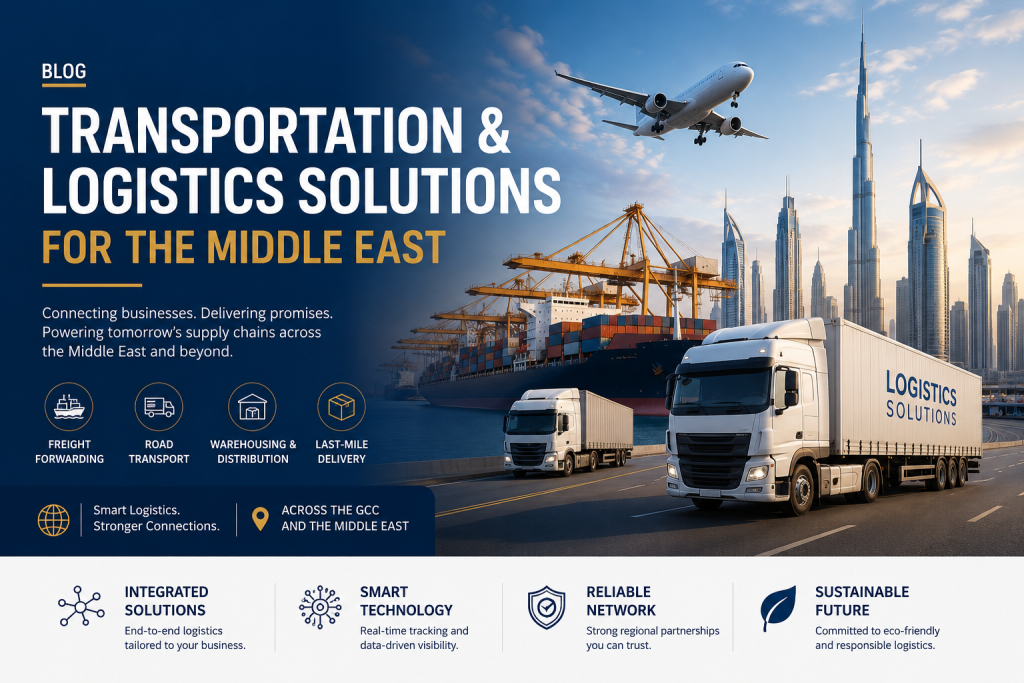
How Smart Supply Chains Are Transforming Trade Across the GCC
The transportation and logistics industry in the Middle East is undergoing a major transformation. Driven by rapid urbanization, booming eCommerce, infrastructure investments, and digital innovation, the region has become one of the world’s fastest-growing logistics hubs.
From Saudi Arabia’s Vision 2030 to the UAE’s advanced port and freight systems, Middle Eastern countries are investing heavily in smarter transportation networks, faster cargo movement, and sustainable logistics solutions.
For businesses operating across the GCC and beyond, choosing the right logistics partner is no longer just about moving goods from one place to another. It is about speed, visibility, reliability, cost efficiency, and seamless supply chain management.
The Growing Demand for Logistics Services in the Middle East
The Middle East has become a strategic gateway connecting Asia, Europe, and Africa. Its geographic position makes it one of the most important regions for global trade and freight movement.
Several factors are driving the demand for transportation and logistics services:
- Rapid growth in eCommerce
- Expansion of industrial and manufacturing sectors
- Increased import and export activities
- Smart city developments
- Infrastructure modernization projects
- Rising demand for last-mile delivery solutions
Countries such as the UAE, Saudi Arabia, Qatar, Oman, and Bahrain are continuously enhancing road, air, and sea transportation infrastructure to support regional and international trade.
Key Transportation and Logistics Services
Modern logistics companies in the Middle East provide comprehensive solutions tailored to businesses of all sizes.
1. Freight Transportation
Freight transportation remains the backbone of the logistics industry. Companies offer:
- Road freight services
- Air cargo solutions
- Sea freight transportation
- Cross-border trucking
- Heavy equipment transport
- Temperature-controlled transportation
Reliable freight services help businesses reduce delays, improve inventory management, and maintain smooth operations.
2. Warehousing and Distribution
Advanced warehousing facilities play a critical role in efficient supply chain operations. Modern warehouses now include:
- Smart inventory management systems
- Automated storage solutions
- Real-time tracking
- Cold storage facilities
- Distribution and fulfillment centers
Strategically located warehouses across the GCC enable faster delivery and reduced transportation costs.
3. Last-Mile Delivery
With the rise of online shopping, last-mile delivery has become one of the most important logistics services.
Customers now expect:
- Same-day delivery
- Real-time order tracking
- Fast and secure shipping
- Flexible delivery options
Transportation companies are investing in digital technologies and route optimization systems to meet these expectations.
4. Supply Chain Management
Efficient supply chain management helps businesses optimize operations and reduce unnecessary costs.
Modern logistics providers offer:
- End-to-end supply chain visibility
- Demand forecasting
- Procurement support
- Inventory optimization
- Customs clearance services
- Fleet management solutions
An integrated supply chain improves efficiency and strengthens business competitiveness.
Technology is Revolutionizing Logistics
Technology is reshaping the future of transportation and logistics in the Middle East.
Digital transformation has enabled companies to improve efficiency, reduce operational costs, and deliver better customer experiences.
Key Technologies Transforming the Industry
Artificial Intelligence (AI)
AI helps logistics companies predict demand, optimize delivery routes, and improve fleet management.
Internet of Things (IoT)
IoT-enabled tracking systems provide real-time updates on cargo location, temperature, and delivery status.
Automation
Automated warehouses and robotic systems increase operational efficiency and reduce human error.
GPS Fleet Tracking
Real-time fleet monitoring improves driver safety, fuel efficiency, and route planning.
Cloud-Based Logistics Platforms
Cloud solutions help businesses manage shipments, inventory, invoices, and communication from a single platform.
Sustainability in Transportation and Logistics
Sustainability has become a major focus for logistics companies across the Middle East.
Governments and businesses are adopting environmentally responsible transportation practices to reduce carbon emissions and improve energy efficiency.
Sustainable Logistics Strategies
- Electric delivery vehicles
- Fuel-efficient fleet management
- Eco-friendly packaging
- Smart route optimization
- Green warehousing solutions
- Reduced paper-based processes
Sustainable logistics not only benefits the environment but also improves operational efficiency and long-term profitability.
Why Businesses Need Reliable Logistics Partners
In today’s competitive market, transportation delays and supply chain disruptions can directly impact customer satisfaction and business growth.
A trusted logistics company helps businesses:
- Improve delivery speed
- Reduce transportation costs
- Enhance customer satisfaction
- Ensure cargo safety
- Streamline operations
- Expand into new markets
- Improve supply chain visibility
Choosing an experienced logistics partner enables businesses to focus on growth while ensuring smooth transportation operations.
The Importance of GCC Connectivity
The GCC region continues to strengthen regional trade through improved connectivity and transportation infrastructure.
Major highway networks, smart ports, and modern airports are enabling faster movement of goods between countries.
Cross-border logistics services are becoming increasingly important for businesses looking to expand throughout the Middle East.
Efficient GCC logistics solutions provide:
- Faster customs clearance
- Reduced transit times
- Improved regional trade efficiency
- Better inventory movement
- Enhanced market access
Challenges Facing the Logistics Industry
Despite rapid growth, the transportation and logistics sector still faces several challenges:
Rising Fuel Costs
Fuel prices significantly impact transportation expenses and operational budgets.
Supply Chain Disruptions
Global events and geopolitical uncertainties can affect cargo movement and delivery schedules.
Increasing Customer Expectations
Customers demand faster delivery, real-time updates, and seamless shipping experiences.
Regulatory Compliance
Logistics companies must comply with varying transportation regulations across countries.
Driver Shortages
The industry continues to face shortages of skilled drivers and logistics professionals.
Companies that embrace innovation and digital transformation are better equipped to overcome these challenges.
Future Trends in Middle East Logistics
The future of logistics in the Middle East looks highly promising.
Smart Logistics Hubs
Countries are developing advanced logistics hubs powered by AI, automation, and smart infrastructure.
Autonomous Transportation
Self-driving delivery vehicles and automated trucking systems may become part of future logistics operations.
Drone Deliveries
Drone-based delivery solutions are expected to support faster last-mile delivery in urban areas.
Blockchain in Supply Chains
Blockchain technology can improve transparency, security, and shipment verification.
Hyperconnected Supply Chains
Integrated digital systems will allow businesses to monitor and manage supply chains in real time.
Why Choose Our Transportation and Logistics Services
At [Your Company Name], we provide reliable, efficient, and technology-driven transportation and logistics solutions tailored to your business needs.
Our services include:
- Road freight transportation
- Air and sea cargo services
- Warehousing and distribution
- Customs clearance support
- Last-mile delivery
- Fleet management
- Cross-border logistics solutions
We are committed to delivering safe, cost-effective, and timely logistics services across the Middle East.
With advanced tracking systems, experienced professionals, and a customer-focused approach, we help businesses optimize their supply chains and achieve operational excellence.
Conclusion
The transportation and logistics industry in the Middle East is entering a new era of innovation and growth. As businesses demand faster deliveries, smarter supply chains, and sustainable transportation solutions, logistics companies must continue evolving to meet changing market needs.
By leveraging technology, improving operational efficiency, and focusing on customer satisfaction, modern logistics providers are shaping the future of trade and commerce across the region.
Whether you need freight transportation, warehousing, distribution, or integrated logistics services, partnering with the right transportation company can help your business grow faster and operate more efficiently in today’s competitive marketplace.