

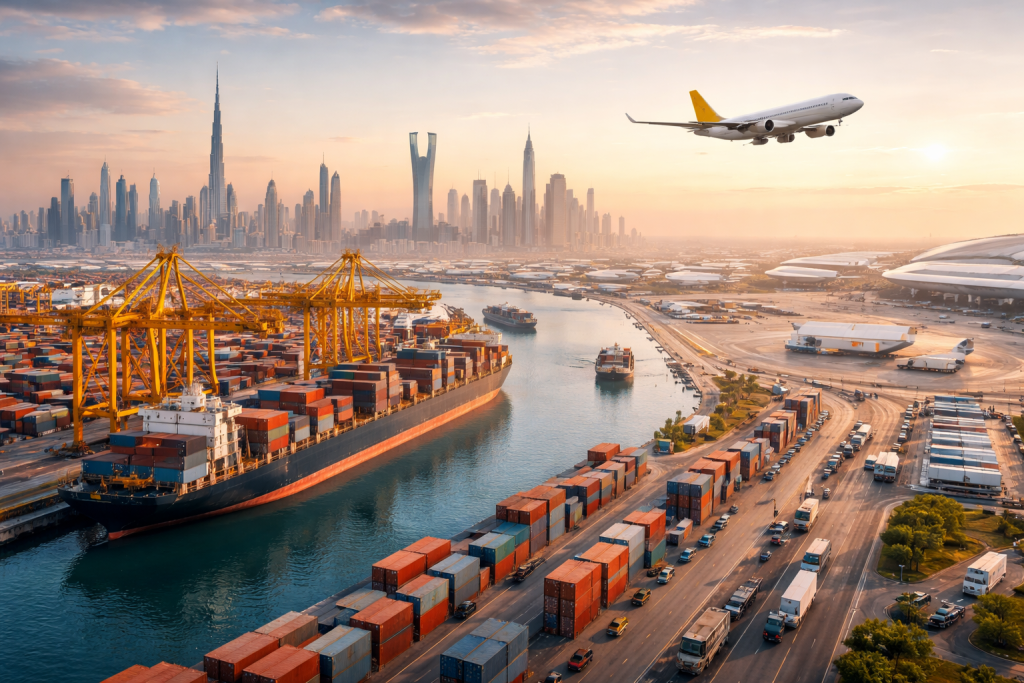
The Gulf Cooperation Council (GCC) countries are quickly becoming important global logistics hubs. These nations play a key role in international trade and global supply chains. Countries such as the United Arab Emirates, Saudi Arabia, Qatar, Oman, Kuwait, and Bahrain are investing heavily in logistics and transportation infrastructure. Their goal is to become major gateways that connect global markets. Because the GCC region is located between Asia, Europe, and Africa, it is perfectly positioned to support international trade and cargo movement.
One of the main reasons for the GCC’s logistics growth is its strategic location. The region sits at the center of major global shipping routes. This location allows easy access to some of the busiest trade corridors in the world. Cities such as Dubai, Riyadh, and Doha are becoming important logistics and transportation centers. These cities help move goods faster between continents. Companies operating in the GCC can reach a large part of the world’s population within a few hours of flight time. This makes the region very attractive for distribution and supply chain operations.
Another important factor behind the GCC’s success in logistics is the huge investment in ports, airports, and transportation systems. For example, Jebel Ali Port in Dubai is one of the largest container ports in the world. It serves as a major gateway for cargo entering and leaving the Middle East. Similarly, Hamad Port in Qatar and King Abdullah Port in Saudi Arabia have strengthened the region’s maritime logistics network. These modern facilities help improve cargo handling, speed up customs processes, and make supply chains more efficient.
Economic diversification is also helping the logistics sector grow in the GCC. Many governments in the region are working to reduce their dependence on oil. They are focusing on developing industries such as logistics, tourism, and technology. Programs like Saudi Vision 2030 aim to turn Saudi Arabia into a global logistics center. The plan includes expanding transportation networks, building new ports, and improving connectivity between cities and international markets. These strategies are attracting multinational companies and global logistics providers.
Free trade zones and logistics parks are another reason for the GCC’s success in global trade. These zones offer several advantages for businesses. Companies can benefit from tax incentives, simple regulations, and full foreign ownership. A well-known example is the Jebel Ali Free Zone in Dubai. This zone hosts thousands of international companies involved in logistics, manufacturing, and trade. Such business-friendly environments encourage investment and help build strong supply chain networks.
The growth of e-commerce in the Middle East is also creating new opportunities for logistics development in the GCC. As online shopping becomes more popular, companies are investing in modern warehouses and faster delivery systems. Many businesses are also using advanced technologies to improve logistics operations. These include automated warehouses, digital cargo tracking, and artificial intelligence for supply chain management. These innovations help the GCC remain competitive in the global logistics industry.
In conclusion, GCC countries are steadily becoming major global logistics hubs. Their strategic location, strong infrastructure, and forward-looking economic policies support this growth. By focusing on innovation, connectivity, and trade development, the region is strengthening its role in global supply chains. As international trade continues to grow, the GCC is expected to become even more important in the future of global logistics.