

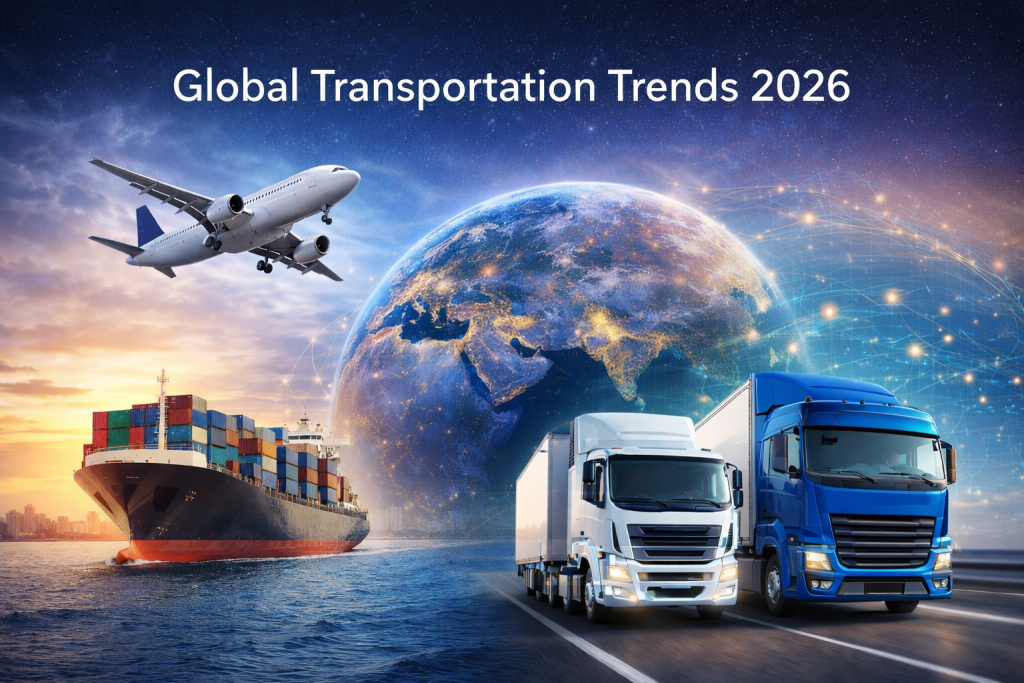
Transportation is the backbone of the global economy, connecting people, goods, and services across continents. In 2026, the global transportation landscape is undergoing rapid transformation driven by technology, environmental concerns, and shifting consumer behaviors. While innovation is accelerating, the sector also faces significant challenges that shape its present and future.
1. Post-Pandemic Recovery and Demand Shifts
The transportation industry continues to stabilize after the disruptions caused by the COVID-19 pandemic. Air travel has largely rebounded, with passenger numbers approaching or even surpassing pre-pandemic levels in many regions. However, travel patterns have shifted:
- Business travel remains lower than before, replaced partly by virtual meetings.
- Leisure and domestic travel have seen stronger growth.
- Demand for flexible and affordable travel options has increased.
Public transportation systems in major cities are still recovering ridership, as remote and hybrid work models persist.
2. Rise of Sustainable Transportation
Environmental concerns are now central to transportation planning worldwide. Governments and companies are actively working to reduce carbon emissions:
- Electric vehicles (EVs) are becoming mainstream, supported by improved charging infrastructure.
- Public transit systems are transitioning to electric buses and trains.
- Airlines are investing in sustainable aviation fuels (SAFs), though adoption remains gradual.
Sustainability is no longer optional—it is a defining factor in policy, investment, and consumer choice.
3. Technological Advancements
Technology is reshaping how transportation operates:
- Autonomous vehicles are being tested and deployed in controlled environments such as logistics hubs and smart cities.
- Artificial intelligence is optimizing traffic management, route planning, and supply chains.
- Mobility-as-a-Service (MaaS) platforms integrate multiple transport modes into a single app, improving convenience for users.
Digitalization is enhancing efficiency while also creating new business models across the industry.
4. Supply Chain and Logistics Challenges
Global supply chains continue to face disruptions due to geopolitical tensions, climate events, and infrastructure limitations. Key issues include:
- Port congestion in critical trade hubs
- Rising fuel and operational costs
- Shortages of skilled labor, especially in trucking and shipping sectors
Companies are responding by diversifying supply routes, investing in local manufacturing, and adopting smarter logistics technologies.
5. Urban Mobility Transformation
Cities are rethinking transportation to address congestion and pollution:
- Expansion of metro systems, cycling lanes, and pedestrian-friendly infrastructure
- Growth of ride-sharing and micro-mobility solutions like e-scooters and bike-sharing
- Implementation of congestion pricing in major urban centers
The focus is shifting toward creating more livable, efficient, and sustainable urban environments.
6. Challenges Ahead
Despite progress, several challenges remain:
- Infrastructure gaps in developing regions
- High costs of transitioning to green technologies
- Regulatory hurdles for emerging technologies like autonomous vehicles
- Equity issues, ensuring transportation remains accessible to all
Conclusion
The global transportation sector in 2026 is at a critical crossroads. While innovation and sustainability initiatives offer promising solutions, the path forward requires balancing economic growth, environmental responsibility, and social equity. As the world becomes more interconnected, the evolution of transportation will play a key role in shaping the future of global development.