

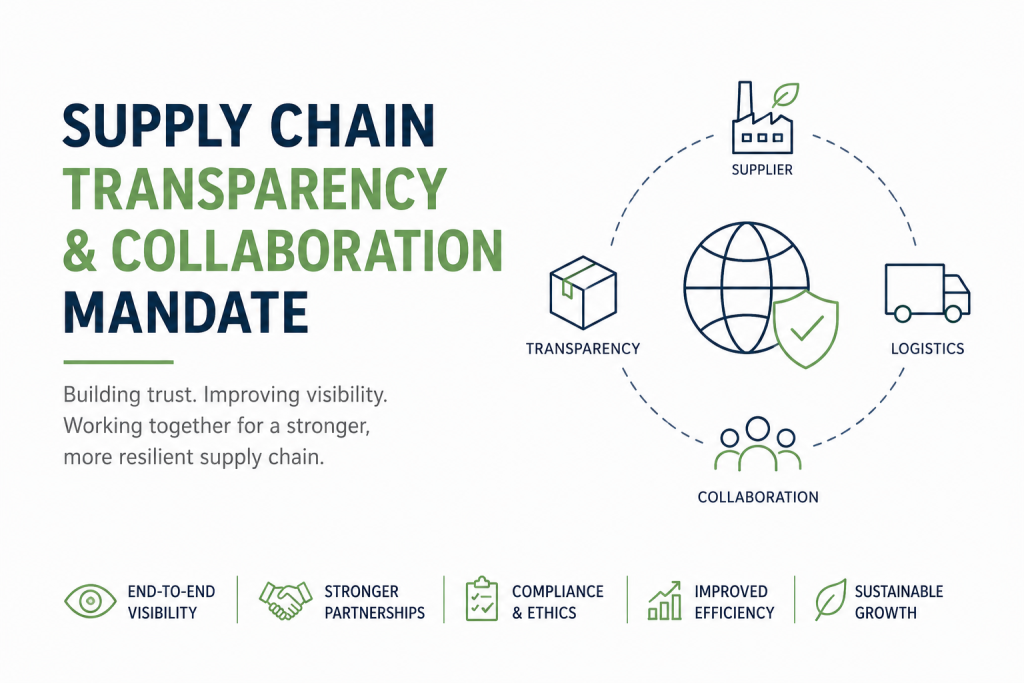
In today’s fast-changing global economy, supply chains are under greater scrutiny than ever before. Customers, regulators, investors, and business partners increasingly expect organizations to demonstrate transparency, ethical sourcing, and seamless collaboration throughout their supply networks. As a result, the Supply Chain Transparency and Collaboration Mandate has emerged as a critical business priority rather than just a compliance requirement.
Organizations that embrace transparency and collaboration are better equipped to manage risks, improve operational efficiency, strengthen supplier relationships, and build long-term customer trust.
What is a Supply Chain Transparency and Collaboration Mandate?
A Supply Chain Transparency and Collaboration Mandate is a strategic framework that encourages businesses to maintain complete visibility across every stage of their supply chain while fostering open communication and collaboration among suppliers, manufacturers, logistics providers, distributors, and customers.
The objective is to ensure that products are sourced responsibly, manufactured ethically, delivered efficiently, and monitored continuously using accurate, real-time data.
Why Supply Chain Transparency Matters
Modern supply chains often span multiple countries, suppliers, and production facilities. Without transparency, organizations face challenges such as:
- Limited visibility into supplier operations
- Difficulty identifying disruptions
- Compliance risks
- Ethical sourcing concerns
- Product quality issues
- Increased operational costs
Supply chain transparency allows businesses to monitor product movement, supplier performance, environmental impact, and compliance standards from raw materials to final delivery.
The Growing Need for Collaboration
Transparency alone is not enough. Effective collaboration enables all stakeholders to work together toward common goals.
Collaboration includes:
- Sharing real-time operational data
- Coordinating production schedules
- Joint demand forecasting
- Supplier performance monitoring
- Inventory optimization
- Risk management planning
When suppliers, manufacturers, logistics providers, and retailers collaborate effectively, businesses can respond more quickly to market changes and unexpected disruptions.
Key Benefits of Supply Chain Transparency and Collaboration
1. Improved Risk Management
2. Stronger Regulatory Compliance
3. Better Customer Trust
4. Increased Operational Efficiency
5. Sustainable Business Practices
6. Enhanced Supplier Relationships
Technologies Driving Supply Chain Transparency
Digital transformation has made supply chain transparency more achievable than ever. Several technologies are playing a key role.
Internet of Things (IoT)
IoT devices monitor shipments, equipment, and inventory in real time, providing valuable operational insights.
Artificial Intelligence (AI)
AI analyzes large volumes of supply chain data to predict disruptions, optimize inventory, and improve demand forecasting.
Blockchain Technology
Blockchain creates secure, tamper-resistant records of transactions, enabling end-to-end traceability and greater trust among stakeholders.
Cloud-Based Collaboration Platforms
Cloud solutions enable suppliers, manufacturers, and logistics partners to share information instantly, improving coordination and decision-making.
Data Analytics
Advanced analytics help organizations evaluate supplier performance, identify trends, and uncover opportunities for process improvement.
Common Challenges
While the benefits are significant, implementing supply chain transparency presents several challenges:
- Limited visibility into lower-tier suppliers
- Inconsistent data quality
- Legacy technology systems
- Resistance to information sharing
- Cybersecurity concerns
- Global regulatory complexity
Organizations must develop standardized processes and invest in modern digital platforms to overcome these obstacles.
Best Practices for Successful Implementation
Businesses can strengthen supply chain transparency by following these best practices:
- Establish clear transparency goals.
- Digitize supply chain operations.
- Build collaborative supplier relationships.
- Standardize data collection and reporting.
- Conduct regular supplier audits.
- Invest in cybersecurity measures.
- Use predictive analytics for risk management.
- Continuously monitor performance using key performance indicators (KPIs).
The Future of Transparent Supply Chains
As global supply chains become more interconnected, transparency and collaboration will continue to shape business success. Emerging technologies such as AI, blockchain, digital twins, and predictive analytics will provide deeper visibility and faster decision-making.
Organizations that prioritize transparency today will be better prepared to meet evolving customer expectations, regulatory requirements, and sustainability goals while maintaining resilience in an increasingly uncertain business environment.
Conclusion
Supply Chain Transparency and Collaboration is no longer optional—it is a strategic necessity for organizations seeking sustainable growth and operational excellence. By embracing digital technologies, fostering stronger supplier partnerships, and promoting end-to-end visibility, businesses can reduce risks, improve efficiency, ensure compliance, and build lasting trust with customers.
About the Author
Name : Adhul Gireesh
MFS Logistics in saudi arabia One of the leading logistics and transportation companies in Saudi Arabia.